企业承诺
Comprehensive Quality Control Process
———
Stringent quality control, permeating every step, ensures that every product meets or even exceeds customer expectations.
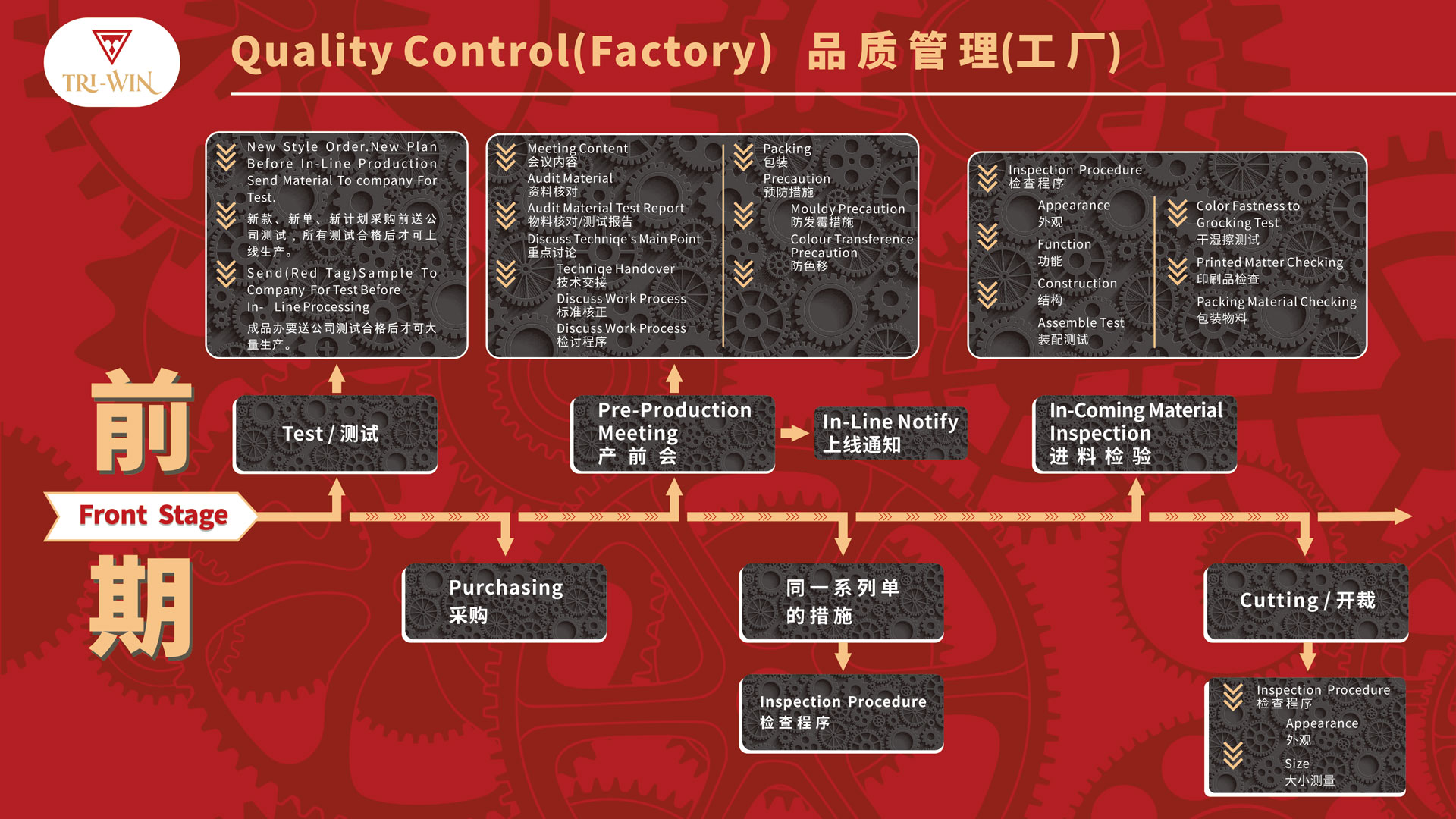
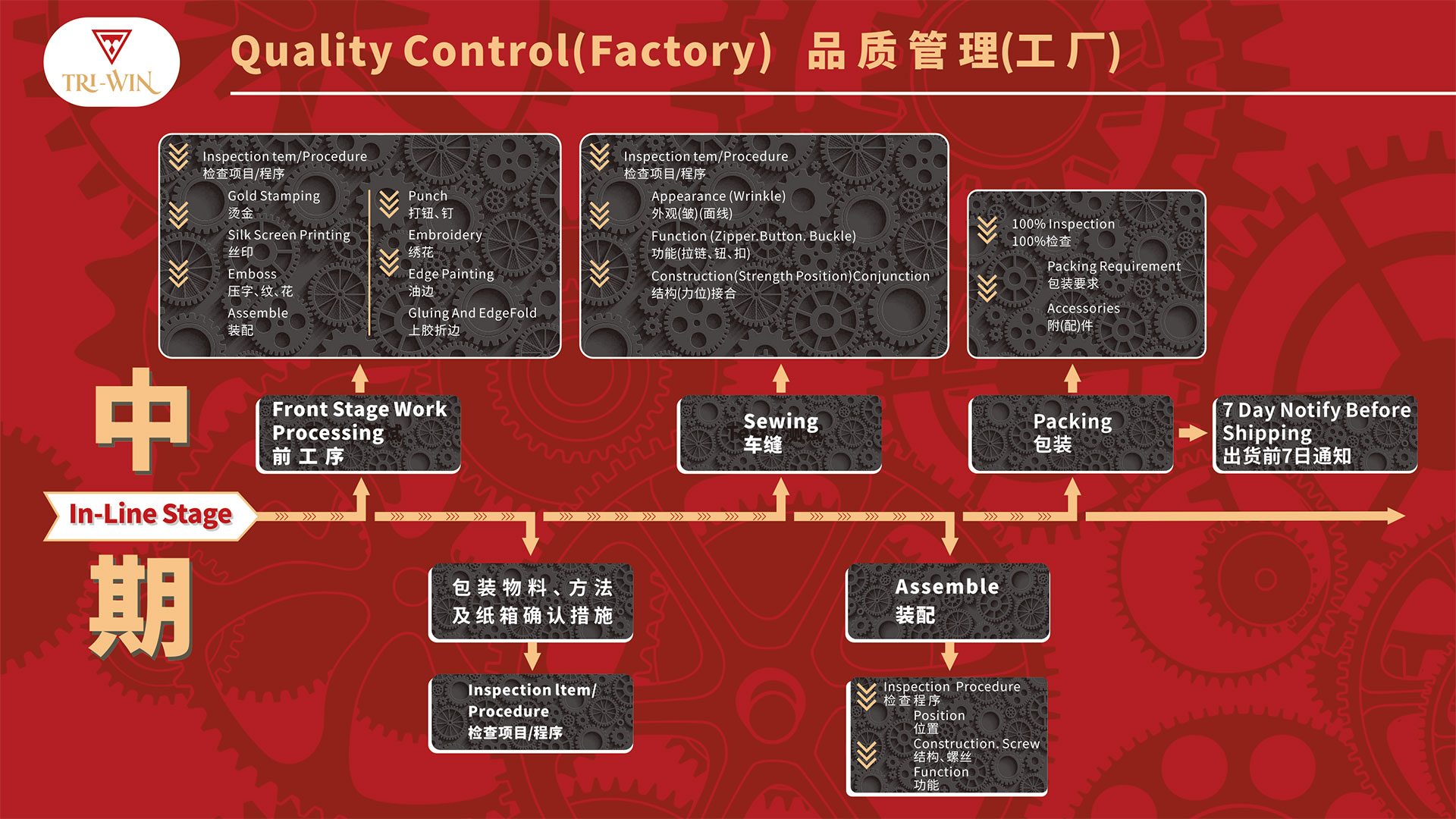
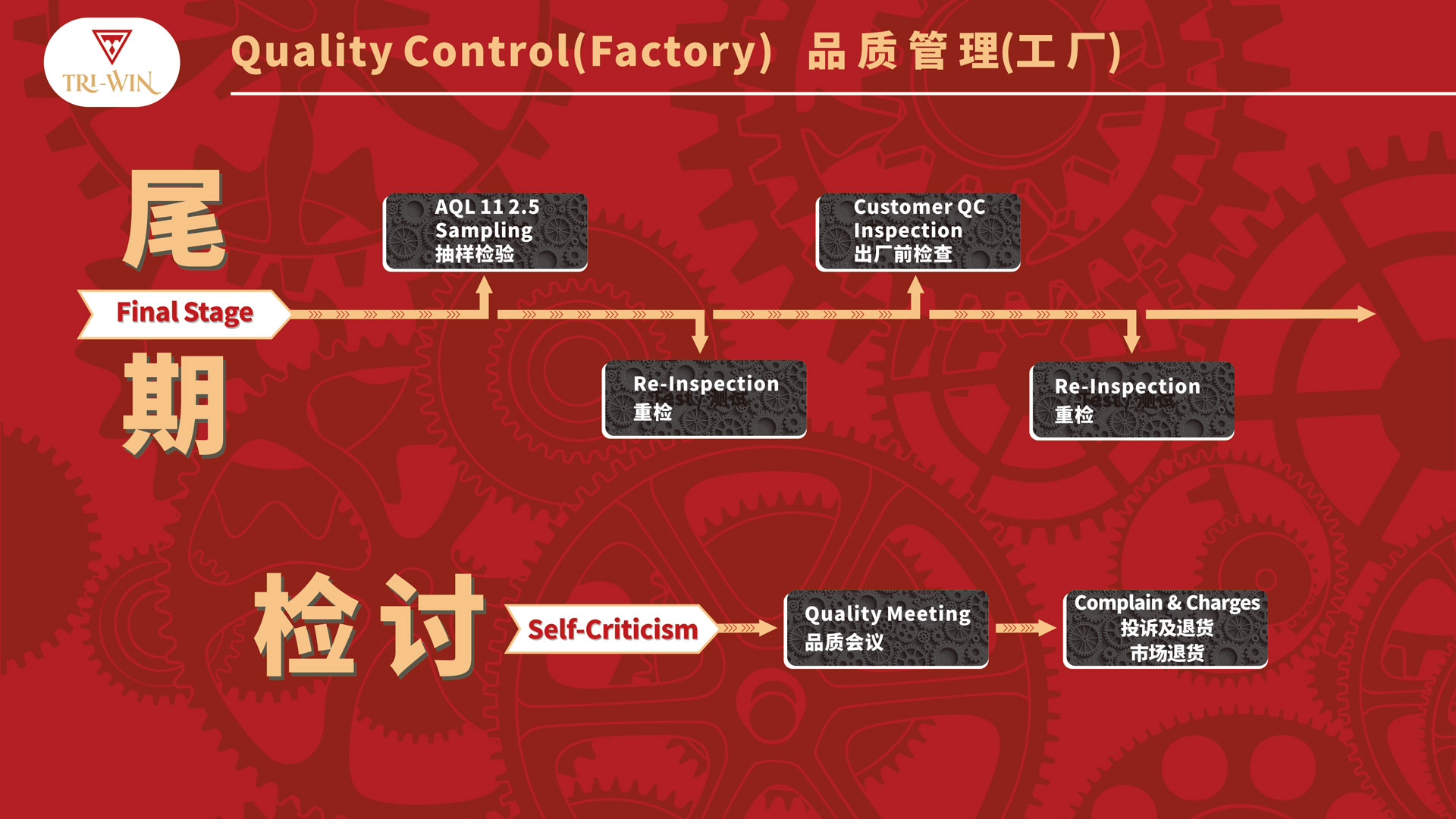
At Tri-Win, quality management permeates every aspect of production. From the rigorous selection of raw materials to the precise control of the production process, and on to the delivery of finished products, we conduct multiple layers of checks and numerous quality inspections. This ensures that each product not only meets, but also surpasses the highest industry standards.
We possess an advanced in-house laboratory equipped with cutting-edge technology, focusing on material testing and quality optimization. The lab is capable of independently carrying out a variety of chemical and physical tests, including fade resistance and mold prevention. This significantly enhances the efficiency of product testing and precisely guarantees the quality and stability of each batch of products. From the choice of materials to the delivery of finished goods, we consistently adhere to high-quality standards.
This comprehensive quality control system, combined with efficient internal testing capabilities, enables us to quickly respond to customer needs and provide trustworthy products to every customer. The strict control of every detail is the best proof of our commitment to quality.
RIGOROUS QUALITY CONTROL PROCESS
Stringent quality control, permeating every step, ensures that every product meets or even exceeds customer expectations.
At Tri-Win, quality management permeates every aspect of production. From the rigorous selection of raw materials to the precise control of the production process, and on to the delivery of finished products, we conduct multiple layers of checks and numerous quality inspections. This ensures that each product not only meets, but also surpasses the highest industry standards.
We possess an advanced in-house laboratory equipped with cutting-edge technology, focusing on material testing and quality optimization. The lab is capable of independently carrying out a variety of chemical and physical tests, including fade resistance and mold prevention. This significantly enhances the efficiency of product testing and precisely guarantees the quality and stability of each batch of products. From the choice of materials to the delivery of finished goods, we consistently adhere to high-quality standards.
This comprehensive quality control system, combined with efficient internal testing capabilities, enables us to quickly respond to customer needs and provide trustworthy products to every customer. The strict control of every detail is the best proof of our commitment to quality.
高品质流程
Leather Tensile Testing
——
Leather samples are stretched under standard testing conditions to measure the maximum tensile strength of the leather when subjected to force.

Tensile Strength of Leather
Structural Stability of Leather
Adaptability of Leather
Zipper Durability Test
——
The zipper is subjected to multiple repeated pulls to simulate the wear and tear it experiences during normal use.
Smoothness of the Zipper
Strength of the Zipper
Durability of the Zipper
Martindale Abrasion Tester
——
Leather samples are rubbed repeatedly against a standard abrasive material under a specific pressure to assess the wear resistance of the leather.
Degree of Material Damage
Wear Resistance of the Material
Changes in the Appearance of the Material
Alcohol Eraser Abrasion Test
——
Leather surfaces are rubbed with an eraser and alcohol or other solutions to simulate the stains and abrasion effects that may be encountered in different environments.
Stain Resistance of Leather Materials
Abrasion Resistance of Leather Materials
Yellowing Resistance Test
——
Leather samples are exposed to ultraviolet light or controlled temperature and humidity conditions to simulate the specific aging environment in which the leather may be prone to yellowing or fading.
Yellowing Resistance of Leather
Luster of Leather
Aging Resistance of Leather
Hardware Salt Spray Test
——
Leather products' metal components (such as zippers, buckles, etc.) are tested for corrosion resistance in a sealed salt spray chamber that simulates a high-humidity and high-salt environment.
Corrosion Resistance of Hardware
Appearance Changes of Hardware
Edge Oil Room Temperature and Low Temperature Flex Test
——
Leather samples (especially the edge oil parts) are exposed to specific temperature environments and then subjected to repeated bending and flexing.
Yellowing Resistance of Leather
Luster of Leather
Aging Resistance of Leather
On-site QC Spot Check
——
QC personnel randomly select a certain number of semi-finished products from the production line or warehouse according to the established spot-check standards.
Appearance of Semi-finished Products
Dimensions of Semi-finished Products
Material Quality of Semi-finished Products
Process Compliance of Semi-finished Products
Shake Test
——
This test simulates various shaking conditions that a handbag may experience in real use, to test the structural stability and durability of the handbag.
Durability of the Handbag under Repeated Shaking
Strength of the Handbag's Stitching, Edges, and Hardware Accessories
Maintaining Integrity of the Handbag during Transportation and Daily Use
Final Inspection of Finished Products
——
During the finished product packaging stage, quality control (QC) personnel conduct a final inspection of each completed finished product.
Appearance Inspection of Finished Products
Functionality Testing of Finished Products
Accessory Check of Finished Products
Packaging Material Inspection
Leather Tensile Testing
—
Leather samples are stretched under standard testing conditions to measure the maximum tensile strength of the leather when subjected to force.
Tensile Strength of Leather
Structural Stability of Leather
Adaptability of Leather
Alcohol Eraser Abrasion Test
——
Leather surfaces are rubbed with an eraser and alcohol or other solutions to simulate the stains and abrasion effects that may be encountered in different environments.
Stain Resistance of Leather Materials
Abrasion Resistance of Leather Materials
Zipper Durability Test
—
The zipper is subjected to multiple repeated pulls to simulate the wear and tear it experiences during normal use.
Smoothness of the Zipper
Strength of the Zipper
Durability of the Zipper
Yellowing Resistance Test
—
Leather samples are exposed to ultraviolet light or controlled temperature and humidity conditions to simulate the specific aging environment in which the leather may be prone to yellowing or fading.
Yellowing Resistance of Leather
Luster of Leather
Aging Resistance of Leather
Martindale Abrasion Tester
—
Leather samples are rubbed repeatedly against a standard abrasive material under a specific pressure to assess the wear resistance of the leather.
Degree of Material Damage
Wear Resistance of the Material
Changes in the Appearance of the Material
Hardware Salt Spray Test
——
Leather products' metal components (such as zippers, buckles, etc.) are tested for corrosion resistance in a sealed salt spray chamber that simulates a high-humidity and high-salt environment.
Corrosion Resistance of Hardware
Appearance Changes of Hardware
Edge Oil Room Temperature and Low Temperature Flex Test
——
Leather samples (especially the edge oil parts) are exposed to specific temperature environments and then subjected to repeated bending and flexing.
Yellowing Resistance of Leather
Luster of Leather
Aging Resistance of Leather
On-site QC Spot Check
——
QC personnel randomly select a certain number of semi-finished products from the production line or warehouse according to the established spot-check standards.
Appearance of Semi-finished Products
Dimensions of Semi-finished Products
Material Quality of Semi-finished Products
Process Compliance of Semi-finished Products
Shake Test
—
This test simulates various shaking conditions that a handbag may experience in real use, to test the structural stability and durability of the handbag.
Durability of the Handbag under Repeated Shaking
Strength of the Handbag's Stitching, Edges, and Hardware Accessories
Maintaining Integrity of the Handbag during Transportation and Daily Use
Final Inspection of Finished Products
—
During the finished product packaging stage, quality control (QC) personnel conduct a final inspection of each completed finished product.
Appearance Inspection of Finished Products
Functionality Testing of Finished Products
Accessory Check of Finished Products
Packaging Material Inspection
质量控制流程
Quality Process Overview
———